

CIBBIM – Nanomedicine. Kidney physiopathology : VHIR Annual Report 2020

Vascular Biology and Metabolism (VAM)

< Back

Overview

The VAM area was created to allow a comprehensive, cooperative and multidisciplinary approach in basic, clinical and epidemiology research. The ultimate goal is the innovation and transfer of solutions in a group of diseases that are closely interrelated and that constitute the leading cause of morbidity and mortality in the world: cardio-cerebrovascular disease, diabetes-metabolic syndrome and renal impairment. The VAM area includes preclinical and clinical research staff from our center, and collaborative work with groups of the highest international prestige. VAM area includes 8 groups: Cardiovascular Pathology, Diabetes and Metabolism, Nephrology, Ophthalmology (focused on retinal vascular disease), CIBBIM-Nanomedicine and Kidney Physiopathology, Medical Molecular Imaging, Neurovascular Diseases, and Research on Aging, Frailty and Transitions in Barcelona. All groups use an integrative tridimensional approach to generate knowledge on the mechanisms of diseases to generate new diagnostic and therapeutic tools.

Publications

281
total
1353
impact factor
4.81
average impact factor

Group Leader: Anna Meseguer Navarro

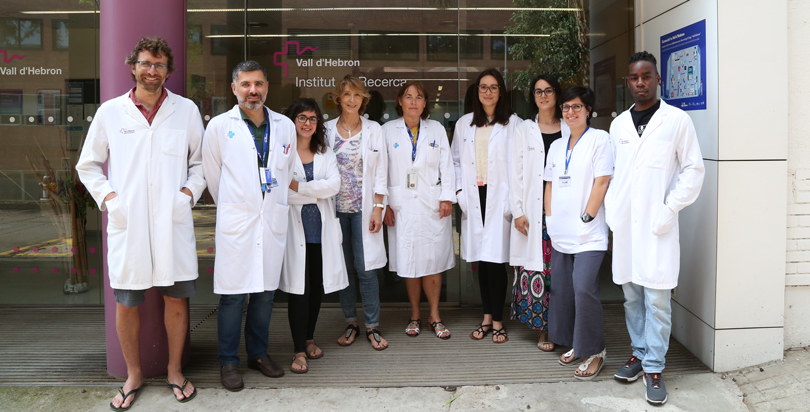
Our main scientific interest is to understand, from a multidisciplinary and translational approach, the molecular and cellular processes leading to renal dysfunction in several kidney pathologies. Specifically, our research lines are (1) to study the pathophysiology of inherited rare renal tubulopathies, (2) to understand the mechanisms of kidney injury and regeneration, (3) to study the development of clear cell renal cell carcinoma (ccRCC) and (4) the study the impact of androgens on those processes. We are experts on the generation of cellular disease models carrying specific gene alterations, on genetically modified animal models and gene therapies, on life-imaging high-resolution microscopy, and working with patients’ samples for translational research. To sum up, our research main objective is to combine –omic data from cellular and animal models with patients’ data to identify novel biomarkers and possible treatments for several renal diseases. We focused on the study of renal tubular epithelium pathologies and the role of sex hormones on disease expression and progression. Our interest has been centered towards: 1) Inherited kidney diseases including rare tubulopathies such as Dent 1 Disease (DD1) and Familial Hypomagnesemia with Hypercalciuria and Nephrocalcinosis (FHHNC) and the cortico-resistant nephrotic syndrome due to mutations in the Crb2 gene. 2) Mechanisms of tubular regeneration after injury to prevent kidney fibrosis. 3) Definition of common mechanisms between kidney injury/regeneration and clear cell renal cell carcinoma development and progression, with special attention to the HAVRC1/KIM-1 protein.

Four Ph.D. thesis, one from the PhD4MD Program, are currently supervised by our group. We have strengthened research projects in collaboration with Patients Associations (ASDENT and HIPOFAM) and joined the Rare Kidney Stone Consortium (RKSC), led by the Mayo Clinic (MN, USA). We have stablished a collaboration with ASDENT and Nostrum Biodiscovery to generate a first-in-class candidate for Dent 1 disease, using the Mare Nostrum Supercomputing Center. Dr. Gema Ariceta coordinates the only Spanish member center at the European Rare Renal Diseases Network (ERKNet).

VHIR Annual Report 2020